
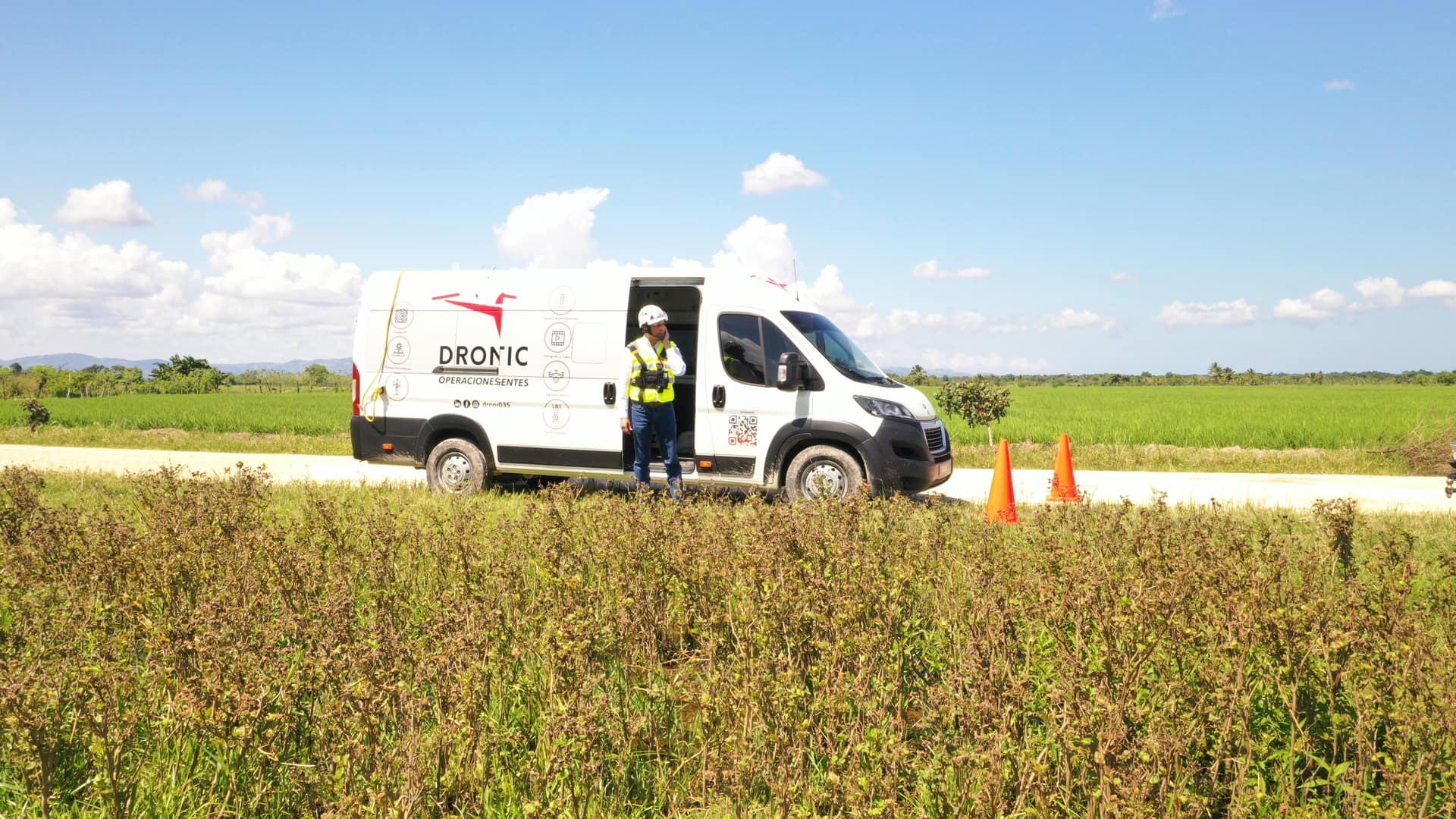
Operating a drone for commercial purposes in the Dominican Republic is not a free activity: it is an aerial operation regulated by the civil aviation authority. Many clients discover this late, when a deliverable turns out to be invalid or an incident reveals that the operator was flying without certification. This article explains, factually, what the Dominican legal framework requires of commercial drone operators, what IDAC certification consists of, and why hiring a non-certified operator transfers a real risk to the client. It does not replace legal advice, but it gives you the map for what to ask and what to verify before signing.
The IDAC and RAD 107
The Dominican Institute of Civil Aviation (IDAC) is the governing body of the national airspace. In line with the standards of the International Civil Aviation Organization (ICAO), the IDAC established a specific regulatory framework for remotely piloted aircraft, whose reference standard is RAD 107 (the Airworthiness Regulation for remotely piloted aircraft system operations).
The central principle of RAD 107 is straightforward: any drone operation for commercial, for-profit or research purposes within Dominican airspace must be registered and carried out by personnel holding valid official licenses and certifications. Flying commercially without meeting these requirements constitutes an unauthorized aerial operation, with the legal consequences that entails for both the operator and whoever hires them.
What the IDAC requires of a commercial operator
To legitimately provide commercial services — LiDAR surveying, infrastructure inspection, mapping, professional photography — an operator must meet a structure of requirements that, broadly, spans three pillars:
- Remote pilot license: the pilot in command must hold the training and official license issued by the IDAC to operate RPAS for commercial purposes, including the medical and theoretical-practical requirements the authority establishes.
- Aircraft registration: each drone used in commercial operations must be registered with the IDAC, with its corresponding identification and verification of its technical characteristics and safety systems.
- Aeronautical civil liability insurance: a specific policy covering damage to third parties and property arising from the aerial operation, an indispensable requirement to operate legally.
Added to this, in practice, is the coordination of flight plans when the operation requires it: certain zones and altitudes demand prior authorization or coordination with the authority and with air traffic control. A serious operator handles these permits as part of the service, not as a formality the client discovers midway through the project.
Why this matters to the client, not just the operator
It is easy to think certification is the provider's problem. It is not: when you hire a commercial aerial operation, part of the regulatory and liability risk falls on you as the contracting party. These are the three concrete fronts where a non-certified operator exposes you:
Liability in an incident
If a drone falls onto a turbine, an industrial building, a power line or — most serious — onto people, and it is proven that the operation was commercial and unauthorized, the company that hired the illegal service is exposed to claims and sanctions. The operator's informality does not protect the client; on the contrary, it drags them in.
Invalid deliverables
A topographic survey or an inspection produced by an unauthorized operation has an underlying problem: its origin is an activity carried out outside aeronautical regulations. That can compromise the acceptance of the product by third parties — an institution, a bank, an end client or a tender process — that require the data to come from a regular operation. Paying for a deliverable that is then unacceptable is a pure cost.
Voided insurance
This is the most underestimated risk. In the event of an accident caused by an unauthorized commercial aerial operation, it is foreseeable that the policies involved will decline coverage once it is proven the damage originated in an illegal activity. The marginal saving of hiring an informal operator evaporates against a single uncovered event: the client ends up bearing a loss they believed was insured.
How to verify an operator is compliant
Before hiring, request and verify three concrete things: that the pilot in command holds a valid IDAC license for commercial operations; that the aircraft to be used are registered with the authority; and that a current aeronautical civil liability policy exists. A serious operator hands over this documentation without evasion, because it is part of how they work. If a provider dodges these questions or downplays their importance, that evasion is itself an answer.
At Dronematic we operate entirely within the RAD 107 framework: pilots with valid IDAC licenses, registered aircraft and aeronautical civil liability coverage, with flight-plan coordination when the operation requires it. Hiring a certified operator is not a luxury: it is what guarantees your data is captured legally and your deliverables have backing. If you would like to learn about our certifications or discuss your project, let's talk.


