
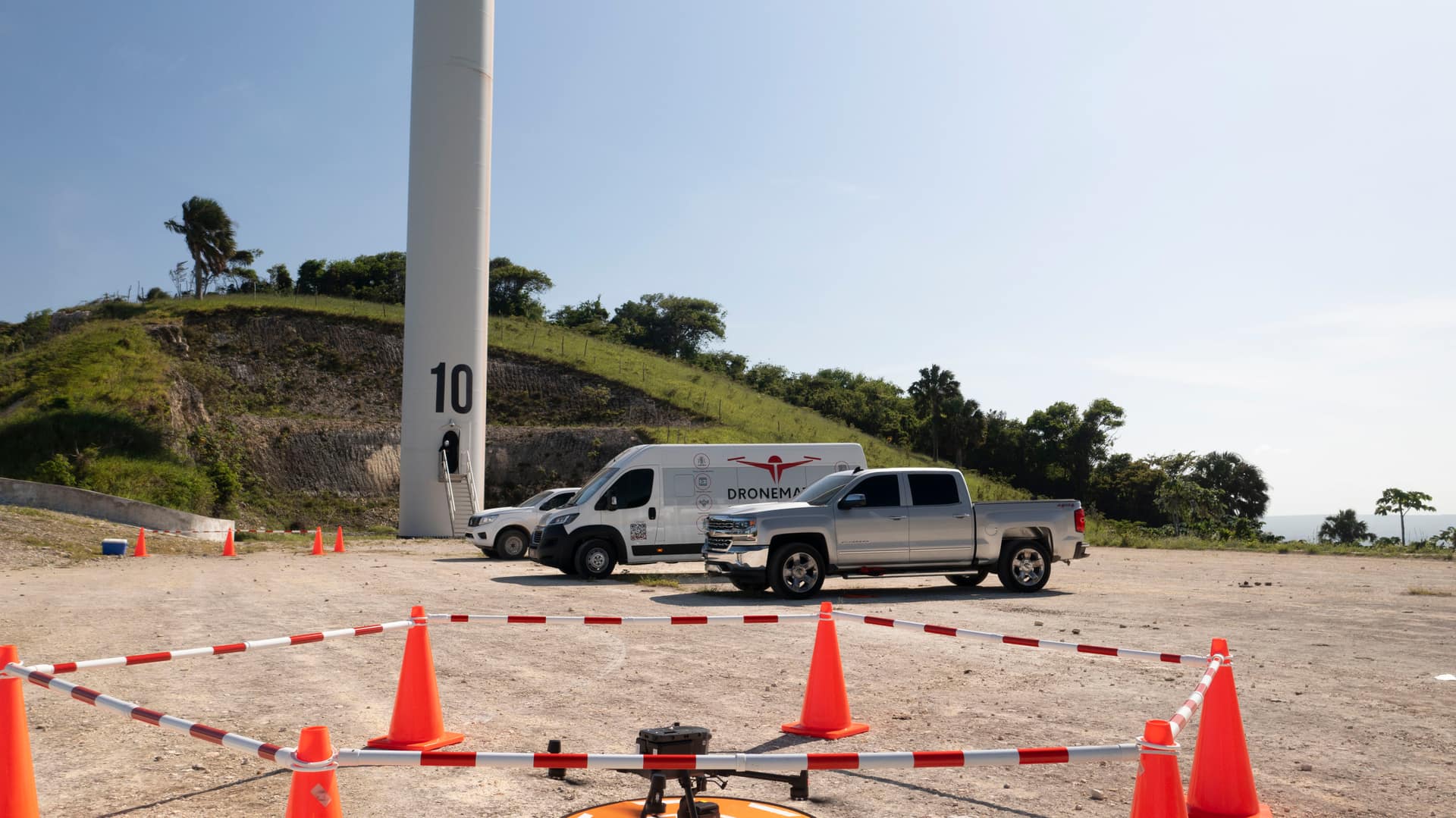
The rapid expansion of Remotely Piloted Aircraft Systems (RPAS) technology, commonly known as drones, has opened up infinite possibilities for technical optimization in the construction industry, the real estate sector, precision agriculture and the inspection of critical infrastructure in the Dominican Republic. However, like any other aircraft that traverses the national airspace, commercial drone flight is strictly regulated by national law. The supreme aeronautical authority responsible for ensuring operational safety is the Dominican Institute of Civil Aviation (IDAC).
Unfortunately, the local market has a high proliferation of informal operators and hobbyist pilots who offer commercial services without holding the proper legal accreditations. Hiring this type of service exposes companies to very serious civil, criminal and corporate liability risks in the event of an accident, in addition to substantial fines and insurmountable delays to their projects. In this technical article, we explain in detail what IDAC certification is, what its mandatory requirements are for commercial operations, and why hiring a certified provider such as Dronematic is indispensable to ensure the success and legal compliance of your engineering projects.
What Is the IDAC and the RAD 107 Regulation?
The Dominican Institute of Civil Aviation (IDAC) is the governing body of the aeronautical sector in the Dominican Republic. In line with international agreements and the recommendations of the International Civil Aviation Organization (ICAO), the IDAC issued a framework of specific aeronautical regulations to control drones in the country, with the reference standard being **RAD 107** (Airworthiness Regulation for Remotely Piloted Aircraft).
RAD 107 clearly establishes that any aerial operation carried out with a drone for commercial, for-profit or scientific research purposes within the national airspace must mandatorily be registered and operated by personnel who hold valid official licenses and certifications issued by the institution. Flying a drone for commercial purposes without meeting these specifications is considered a direct violation of Dominican civil aviation law.
Mandatory Requirements for Commercial RPAS Operations
For a drone company to legitimately operate providing commercial engineering services in the Dominican Republic, it must rigorously comply with a three-tier compliance structure required by the IDAC:
- 1. RPAS Operator License (Certified Pilot): The pilot in charge of the aircraft must have completed theoretical and practical training at aeronautical schools authorized by the IDAC, pass official aeronautical medical exams (Class 3) and hold a commercial drone pilot license issued by the IDAC's Licensing Department.
- 2. Official Aircraft Registration: Each drone used in commercial operations must have a unique registration plate (tail number) granted by the IDAC after verifying the aircraft's weight, the built-in technical safety systems (such as automatic return-to-home on signal loss or low battery) and the radio characteristics of the transmitter.
- 3. Aeronautical Civil Liability Insurance: It is an indispensable legal requirement to hold a commercial aviation insurance policy specific to drones that covers damage to third parties and property damage in Dominican airspace in the event of an in-flight failure.
The Risks of Hiring Non-Certified Operators
The business sector must understand that delegating LiDAR topographic surveys of millions of tareas or inspections at high-voltage wind farms to a non-certified pilot entails colossal dangers that are not worth assuming to save a marginal budget difference:
**Invalidation of Corporate Insurance:** In the event that an informal drone suffers a battery malfunction and falls onto a wind turbine, a mining processing plant, high-voltage power lines or civil works personnel, your company's general insurance policy will immediately decline the claim once it is proven that the accident was caused by an unauthorized commercial aerial operation conducted illegally.
**Data Seizure and Infractions:** The IDAC and the Specialized Corps for Airport and Civil Aviation Security (CESAC) have full authority to intervene in unauthorized aerial operations in the field, seize the pilot's equipment and impose severe fines on the company that hired the illegal service.
**Deficient Quality and Technical Rigor:** A non-certified operator lacks the training in cartography, scientific photogrammetry and reference systems required to certify the accuracy of a topographic drawing. The data delivered often lacks validated differential control points and rigorous geodetic reports.
Compliance and Rigor in Every Dronematic Operation
At Dronematic we operate under the highest regulatory compliance standards in the Dominican Republic. All of our commercial pilots hold valid RPAS licenses issued by the IDAC, and each of our aircraft (including the heavy multirotor drones that carry LiDAR scanners) has a tail number and international aeronautical coverage insurance. In addition, we strictly coordinate specific flight plans with regional control towers and local civil aviation air traffic control centers when necessary.
Our clients' operational peace of mind is non-negotiable. With Dronematic, you have complete certainty that your geospatial data is captured safely, accurately and in full compliance with national law.


